
To help select the suitable product for architectural, industrial, and filtration applications we have to know how expanded metal mesh is made, it is not like woven mesh, expanded metal undergoes a certain process of manufacturing which is cutting and stretching a solid metal sheet into a continuous pattern of openings, this process has to be efficient in order to create a strong, lightweight structure with excellence in ventilation and material utilization.
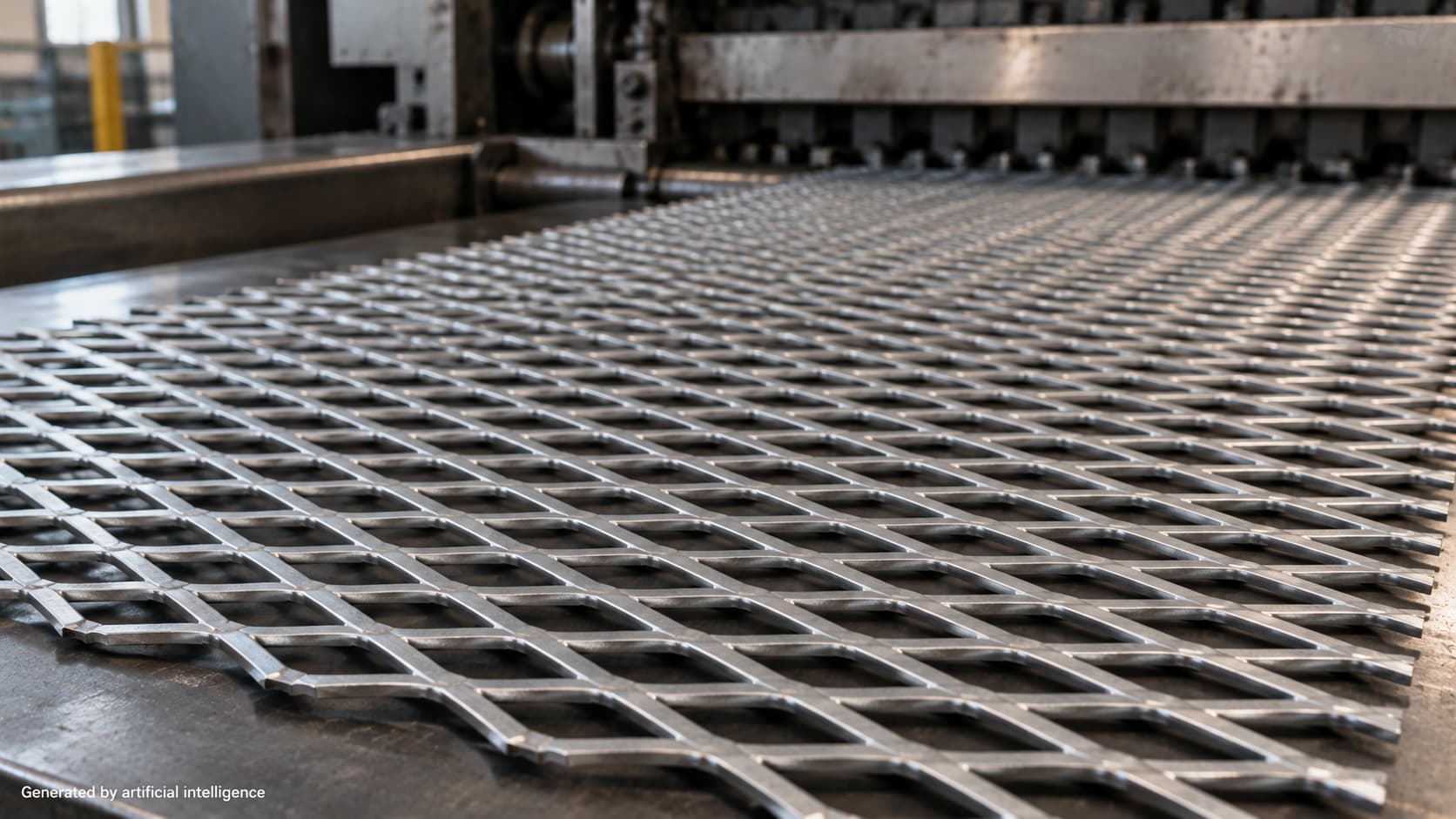
The expanded metal manufacturing process works on transforming a flat metal sheet into a mesh taking into consideration leaving no wastage behind resulting in openings at the end.
Slitting and Stretching the Metal Sheet: A specialized machinery is engineered to make precise cuts before stretching the metal as a result, this process expand the metal sheets into a modeled connected mesh structure without affecting their strength and continuity.
How the Mesh Pattern and Openings Are Formed: The cutting and stretching are set according to required dimensions that determine the opening shape percentage, strand width, and overall mesh pattern geometry. These specifications can be customized or come in standards, the process allows for producing mesh to fit a wide range of different functionalities and decorativeness in requirements.
Consistency of expanded metal production leans on many factors such as, selecting material types, setting of accurate specifications as well as adopting the right finishing processes and methods.
Selecting the Base Metal and Sheet Thickness: Common expanded metal mesh materials include a specific set of items such as mild steel, galvanized steel, aluminum, Corten and stainless steel. The selection of Material depends heavily on what you want to achieve also it depends on other factors such as robustness, weight, level of corrosion resistance, and the intended application.
Setting the Pattern and Production Requirements: A number of parameters is set by Manufacturers in order to establish the opening size, strand width, sheet thickness, dimensions, and required quantity, these determinants guide the entire processes of the expanded metal mesh production and help I ensuring the finished product meets project specifications
Cutting, Flattening or Other Finishing Steps: the mesh can follow other process after expansion such as cutting to size or flattening to create a smoother surface to fit a specified need, Additional treatments can also be applied, such as galvanizing or powder coating in order to improve protection and appearance of the final metal.
Strand Width, Opening Size and Sheet Thickness: those are the main determiners of the mesh structure, as strand width and thickness influence robustness and rigidity, while opening size affects visibility, airflow, and open area. Deciding on the right combination guides you to achieve the required balance between all elements mainly performance and weight.
Material Choice and Required Open Area: Different materials can offer variations in mechanical and corrosion-resistant features. Ventilation, screening, and visual appearance are highly affected by the open area. As a result, being familiarized with these factors can help determine how expanded metal is made to ultimately meet specific application needs.
Quality control is an essential step before dispatching the materials, the general checks include:
To receive a quotation with accuracy, provide the material type, sheet thickness, mesh opening dimensions, strand specifications, sheet size, quantity, and required finish. All the aforementioned stuff is important additionally, drawings or sample images is a plus if you have.
At ANB Metal, our team helps identify the suitable manufacturing specifications for your industrial or architectural project in a crafted, well-designed way.
It includes slitting and stretching a solid metal sheet to form a connected mesh pattern, in addition to any other required processes such as cutting, flattening, or finishing.
Expanded metal is made by undergoing a certain process called cutting and stretching a solid sheet. Woven mesh is a completely different one.
Yes of course. Flattening can results in a smoother surface suitable for different applications while standard raised expanded metal keeps its three-dimensional structure apparent.
Common options include mild steel, galvanized steel, aluminum, and stainless steel. Each of which depends on the intended use and environmental conditions you want to respond to.
A bundle of items can be provided such as material, thickness, opening size, strand dimensions, sheet size, quantity, finish, and application details.