
The right selection of perforated metal panels for facade applications depends on several factors such as material, perforation, thickness, finish, and environmental conditions without these consideration the panels might fail to achieve the requested results, the right specifications will largely determine that how perforated metal facade panels ensure architectural appeal and long-term performance at the same time.
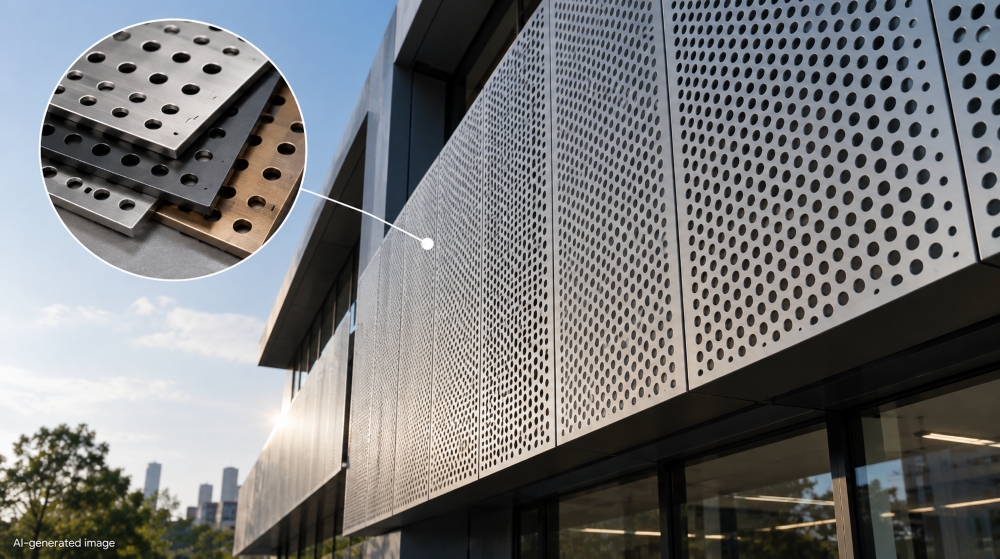
When it comes to façade panels we must consider a bundle of factors as this can be critical for achieving the purpose of the façade, those features include climate, structural requirements, panel size, open area, perforation pattern, fixing system building's location and maintenance needs, moreover the main purpose of perforated metal façade should be selected based on the final goal such as aesthetics, privacy, ventilation, or solar control.
A bundle of factors comes in when selecting ideal material for any project such as environment, budget, strength requirements, and appearance.
Aluminum: as being of lightweight and corrosion-resistant material, aluminum is widely used for metal facade panels because it reduces structural weight on the building.
Carbon/Mild Steel: as it offers excellent solidity and is suitable for robust perforated facade panels it is also highly on demand when it is strongly coated against corrosion.
Galvanized Steel: Galvanized steel is one of the most selected materials as it provides a robust combination of strength, corrosion protection, and cost efficiency for different exterior applications.
Stainless Steel: Stainless steel offers an excellent corrosion resistance against climate conditions as well as an elegant appearance this makes it suitable for architectural perforated metal applications with high demanding environment.
Copper / Brass / Corten: Copper and brass mainly offer distinctive architectural finishes for many purposes, on the other hand Corten provides a weathered appearance with nice visual suited to contemporary and industrial designs.
The right perforation size depends on many requirements such as level of needed privacy, airflow percentage, daylight level, visibility, and solar control. As smaller holes provide more screening larger ones increase airflow and visibility.
For a perforated sheet metal facade, hole size, pitch, pattern, and open area must all be considered together not as a single factor.
Thickness also depends on many factors such as panel dimensions, wind loads, support spacing, perforation pattern, and fixing method. The Thinner sheets will definitely reduce weight comparing to the thicker ones which provide superior rigidity.
Large perforated metal panels require additional framing or reinforcement in order to be able to get installed properly and withstand outer conditions.
Standard finishes include powder coating, PVDF, anodizing, and galvanizing. The finish will provide suitable protection against UV exposure, moisture, and corrosion at the same time it must achieve the desired appearance so it should combine functionality with practicality
For perforated metal cladding panels we must be careful as selecting the right finish will ultimately affect the long-term exterior performance.
In a results perforated metal cladding is a great way to provide functionality and architectural flexibility this has made it an effective solution for modern building envelopes as it provides right material, pattern, thickness, and finish for each particular establishment, a perforated metal facade delivers a lasting performance and a visual impact at the same time.
Many features must be considered such as privacy, airflow, daylight, solar control, and the required open area.
It is the percentage of the panel occupied by perforations. It greatly affects airflow, light, visibility, and solar performance of the building gas a whole.
It depends on many factors such as panel size, wind loads, support spacing, perforation, and fixing requirements as each premises might require different special needs.
Are perforated metal panels suitable for outdoor use?
Yes. Specified perforated metal panels for facade applications can be an excellent choice if it provides outdoor durability and performance.
Yes. They can reduce solar exposure directly and permits airflow and filtered daylight.
Yes. Dimensions, material, thickness, perforation, open area, color, and finish can all be fully customized according to many different needs
Options include plenty of solutions such as powder coating, PVDF, anodizing, galvanizing, brushing, and polishing, depending on the material.